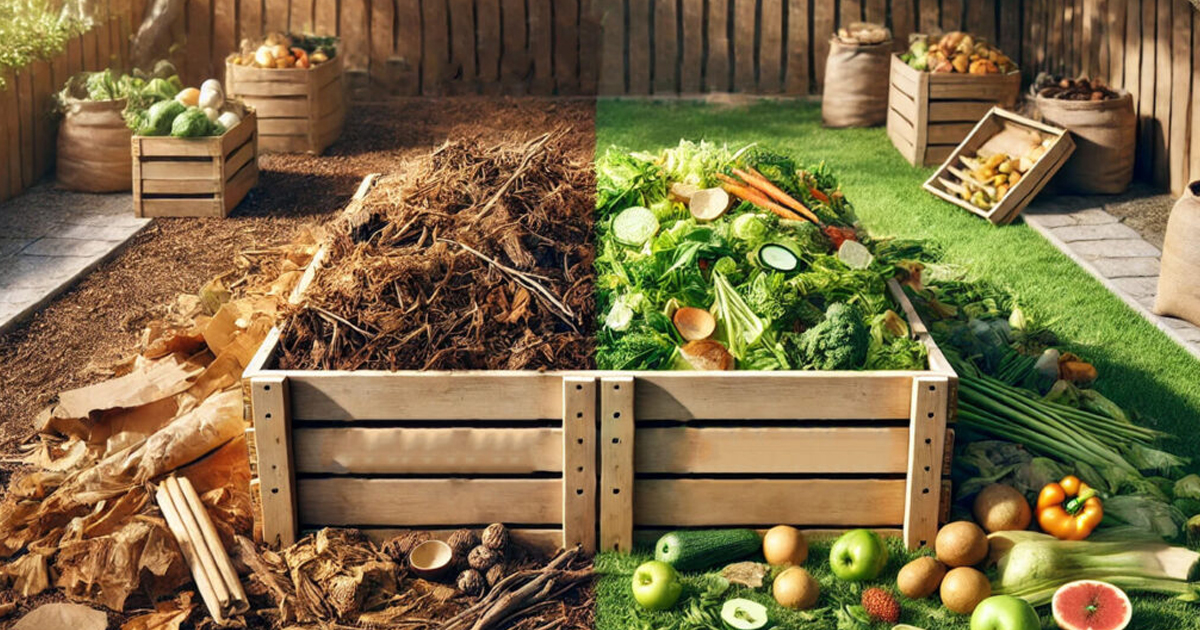
One of the best ways of recycling organic waste and increasing fertility in soils is composting, consequently reducing your environmental footprint. Still, most experienced composters continue to make these twelve common mistakes that slow down this process and give less-than-perfect results. Here are twelve common composting mistakes and how to…
-
-
Understanding The Browns And Greens Mix For Compost
Composting is probably the best means of recycling organic wastes to obtain soils rich in nutrients for the garden. One key to the successful process lies in knowing the balance between both “browns” and “greens.” These mean different organic materials fundamental to the composting process. This paper will explore what…
-
Composting With Newspaper – Putting Newspaper In A Compost Pile
Composting is a process of waste recycling to obtain very useful amendments to soils from natural wastes. While many are conversant with the composting of kitchen scraps, garden waste, and leaves, using newspapers in composting is another effective way of recycling the wastes. In this article, we discuss the benefits,…
-
Give Compost A Pick Me Up: How To Use Coffee Grounds On Plants In The Garden
Composting is one of the oldest techniques used for recycling food organic wastes into nutrient-rich soil amendments. Of the many inputs of ingredients that go into compost, the popularity of coffee grounds is enormous, with a clear objective to benefit from their potential advantage. This paper will focus on how…
-
Eggshells In The Garden: Using Eggshells In Soil, Compost And As Pest Control
Gardeners are in constant quest to develop favorable soil conditions, enhance the growth of plants, and combat pests with minimal or low-cost, natural, and sustainable methods. An example of such a resource would be eggshells. Never treat eggshells as kitchen waste again because they can prove to be one of…
-
Citrus Peels In Compost – Tips For Composting Citrus Peels
Introduction Composting is an intense and extremely effective, environmentally friendly way for recycling your kitchen waste back into imparting soil nutrients for a worthwhile garden. Composting vegetable discard, coffee ground even eggshells are a snap for most people, but citrus peel brings up some questions. Can you compost citrus peels?…
-
Composting Meat: Can You Compost Meat Scraps
Although this is a very ancient practice of recycling organic wastes for fertilizer, the first question that comes to people’s minds seems to be whether or not meat scraps can be added to the heap. Though the direct answer would be yes, it is possible to compost meat, careful management…
-
Kitchen Composting: How To Compost Food Scraps From The Kitchen
Composting is a natural, inexpensive, and environmentally friendly process for recycling waste by decreasing the load on landfills and producing structured, rich soil for plants. Kitchen composting refers to innovative food leftovers processed directly from your own houses into highly valued compost. Whether small apartments or large backyards, everyone can…
-
Sustainable Seed Starting Tips: 10 Easy, Eco-Friendly Ideas
It is an activity that is very enriching and rewarding in itself, as one is able to get fresh produce and beautiful flowers having a closer relation with nature. Starting seeds can be rather environmentatively expensive to a great degree when it is done by conventional means and materials. Many…
-
Community Seed Banks: How To Start A Seed Bank
Introduction Community seed banks represent an extraordinarily seminal contribution toward agricultural biodiversity conservation, local community empowerment, and promotion of sustainable farming practices. The banks hold genetic diversity by storage of the seeds of various crops that have the capability of handling various ecological conditions and are tolerant to pests and…
-
Milk Jug Winter Sowing: How To Start Seeds In A Milk Jug
It’s an ingenious way of winter sowing in milk jugs—eco-friendly and sure to get you ahead of the ball in your garden come spring. This technique uses washed and recycled plastic milk jugs as mini greenhouses for starting seeds. What follows is a step-by-step process on how to get your…
-
DIY Soil Blocker: How To Make Soil Blocks For Seed Starting
Starting seeds can be not only one of the most rewarding ways but also one of the least expensive to grow many plants in your garden. One such method that has gained much popularity with gardeners is by using soil blocks. Essentially, it is just a compacted cube of soil…
-
10 DIY Seed Starter Pot Ideas – Repurpose, Reuse, and Recycle Household Items
Growing plants from seed is gratifying and financially efficient, but buying seed starter pots can take a penny from your purse. You can, though, repurpose, reuse, and otherwise recycle household odds and ends and turn them into DIY seed starter pots. Here are ten ways to get started on innovative…
-
Seed Starting In Coir: Using Coconut Coir Pellets For Germination
Introduction Starting of seeds can be very rewarding, but it certainly does call for the right materials and techniques. Itself a natural fiber, extracted from the husk of coconuts, at large, coconut coir has gained importance as a medium for starting seeds in this new era due to its representation…
-
What Are Plantable Containers: Gardening With Biodegradable Plant Containers
One of the great prizes in gardening has to be plantable containers in today’s frenzy over sustainability and eco-friendliness. Being biodegradable, plant containers do make for a much greener alternative to plastic pots. It is in response to this growing awareness that the trend toward environmentally friendly options has sprung…